University of Michigan’sRole in Transferring Anti-Satellite Weapons Technology
University of Michigan’s Transfer of Technology to Calculate Orbits of Asteroids and Spacecraft may have Helped China Develop Anti-Satellite Weapons Dr. Daniel Scheeres studies how to rendezvous objects in space such as landing a spacecraft on an asteroid. However, the same technology can be used to shoot down a satellite or rendezvous a hunter killer satellite with a target satellite in orbit. Dr. Scheeres gave a series of lectures in July 2006 at Harbin Institute of Technology entitled;
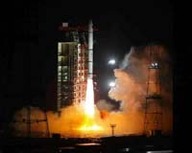
“HIT has been mainly working on the key research programs in the space flight fields. It has achieved encouraging R&D results in such fields as inertia technology, radar technology, communication technology, automatic testing technology, simulation technology, new material technology, optoelectronic technology, computer technology, single key techniques related to satellite and spacecraft, ultra precision and special processes, and precision thermal formation technology. In addition, HIT achieved its ISO 9001 quality system certification at one go in July, 1999, and became China's first university with certified quality assurance system for doing major programs.” (From the HIT website: HERE ) In January 2007 China demonstrated its anti-satellite weapon capability by shooting down an old Chinese weather satellite using a kinetic kill vehicle (KKV), scattering debris all through low earth orbit. The US space station has had to maneuver to avoid being hit by some of this debris. http://en.wikipedia.org/wiki/2007_Chinese_anti-satellite_missile_test One person who paid particular attention to Dr. Scheeres presentations in China was Yu Xiaohong. She works for a division of the PLA known as the Academy of Equipment Command & Technology. She has written scientific articles on anti-satellite kinetic kill vehicles. Ning Ziwen and Yu Xiaohong, “Error Analysis of Orbit-transferring Velocity Increment on KKV in Space,” Journal of the Academy of Equipment Command & Technology, Issue 3, 2004. Yu Xiaohong has written several other papers on anti-satellite technology since at least 2001, such as; Yu Xiaohong, Feng Shuxing, Qin Daguo, “The Influence and Enlightenment of the U.S.A. Space War Game,” Journal of Institute of Command and Technology, Issue No. 2, 2001. Dr. Scheeres claims that he had no knowledge of her military affiliations before she came to work with him at the University of Michigan from February to August of 2007. During that time she undoubtedly had access to sophisticated computer software and mathematical models for calculating orbits and trajectories. It is unclear what she may have take back with her to China. In January 2010, American intelligence detected a fresh Chinese anti-satellite test. This time Beijing destroyed one of its own missiles, rather than a satellite, 150 miles above Earth. The Americans regarded the move as an “anti-satellite test”. The US had also reacted by testing its own anti-satellite missile. http://www.telegraph.co.uk/news/worldnews/wikileaks/8299491/WikiLeaks-US-vs-China-in-battle-of-the-anti-satellite-space-weapons.html In August 2010, China followed this with a test of their ability to rendezvous two satellites in space, which may have civilian space uses but is also what is needed for hunter/killer anti-satellite weapons. http://www.wired.com/dangerroom/2010/08/chinas-secret-satellite-rendezvous-suggestive-of-a-military-program/ It is unclear whether the training and dual use technology provided to Yu Xiaohong and at HIT was used directly in the development of China’s anti-satellite capability but it certainly was sensitive material. The University of Michigan and Dr. Scheeres should not have provided such experience to a scientist with such close military ties to the PLA. The Strom Thurmond National Defense Authorization Act (NDAA) for fiscal year 1999 requires a Presidential certification to Congress prior to the export to China of missile technology controlled items. The University of Michigan claims the sort of technology that Dr. Scheeres was working with was “fundamental research” but even if it does not break the law, it certainly could be applied directly to China’s missile technology and is an example of how important dual use technology is leaking from American Universities to China. 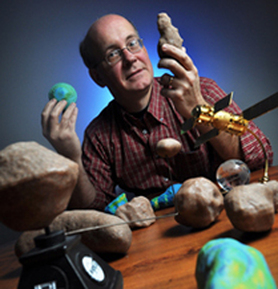 |
Joint Fuel Cell Research
|